Ecological breakdown, technological disruption, political fragmentation, and crises of meaning are increasingly entangled.
Their causes cross the boundaries of disciplines, institutions, and nations. Our responses remain constrained by forms of understanding that struggle to grasp these interconnections.
Today, the Institute of Applied Metatheory is announcing Big Theory: a new framework and field-building effort to tackle big problems at the level of analysis they require.
What we’re announcing
Why big problems need it
Consider ecological degradation. Its causes involve biological and physical processes, economic incentives, technological systems, political institutions, cultural values, and human psychology. These forces interact, reinforce one another, and generate consequences that no single disciplinary perspective can adequately explain.
Understanding such a problem requires tracing its network of causes across these domains. Responding effectively requires discerning where interventions can transform the conditions generating it.
This is a central challenge of the metacrisis. Partial explanations can support interventions that displace problems, reproduce their underlying causes, or create new difficulties elsewhere.
Interdisciplinary and transdisciplinary research are essential responses, but their promise depends on how integration is actually accomplished. Researchers may disagree about what kinds of things exist, how causation works, what counts as evidence, or which levels of explanation matter. Without explicit ways of examining these differences, one perspective may tacitly organize the others, or findings may be assembled without resolving the tensions among them.
What is Big Theory?
Big Theory develops comprehensive frameworks for understanding reality by integrating philosophical foundations with knowledge across the sciences. Familiar to academics as integrative metatheory, it examines the assumptions underlying different theories, critically evaluates their insights and limitations, and brings them into more coherent accounts of the world and our place within it.
The relationship runs both ways:
The aim is knowledge capable of explaining how different dimensions of reality interact, with methods sufficiently transparent to be examined, challenged, and improved.
From Big History to Big Theory

Big History connects cosmic, biological, and human history within a single account, from the origins of the universe to contemporary civilization. That account draws on general relativity, evolutionary theory, and theories of cognition, culture, and social organization. Connecting these explanations raises questions of its own:
- How do physical processes relate to living organization?
- What changes with the emergence of mind and culture?
- Which principles operate across these domains, and where do new explanatory concepts become necessary?
Big Theory investigates these relationships.
Big Data needs Big Theory
Our ability to collect and process information depends for its usefulness on the frameworks through which that information becomes intelligible. This becomes especially consequential in AI-assisted research, where systems can generate apparently coherent syntheses across enormous bodies of information.
Evaluating those syntheses requires methods for identifying conceptual conflations, unsupported assumptions, and unresolved disagreements. Big Theory helps develop those methods and the broader understanding needed to use them responsibly.
Building an open field
IAM is cultivating the scholarly community, publications, methods, and educational resources through which Big Theory can develop. The Integration Society connects researchers across integrative traditions. Its Research Forum provides a setting for presenting and critically examining frameworks, and the Integration Podcast extends these exchanges through deeper conversations. Our journal, Integration: The Journal of Big Theory, provides a scholarly home for theoretical research, methodological development, critical dialogue, and practical application, and its first issue is now being prepared.
Watch the Research Forum introduction.
The field’s vitality will depend on independent research, competing approaches, and sustained intellectual exchange.
A collaborative synthesis
Actualizing the vision for an “integrative metatheory 2.0,” IAM is convening a sustained process of collaborative metatheorizing to develop a next-generation synthesis. The inquiry brings leading frameworks and prior syntheses into dialogue:
Linked names open a Research Forum talk. Integral grammatology and archdisciplinary inquiry contribute further resources for examining how frameworks articulate and relate their claims.
Each approach brings substantial intellectual achievements. Each also has limitations, unresolved tensions, and areas of comparative underdevelopment. Our question is how their encounter can strengthen the participating frameworks and generate a higher-order synthesis with greater explanatory power and practical relevance.
AI can assist with comparison, documentation, and candidate formulations, while human participants remain responsible for verification, interpretation, and judgment.
From public dialogue to collective synthesis
- During 2026Research Forum presentationsPublic sessions examined major integrative frameworks and gave a wider audience access to the inquiry.
- Alongside the ForumIntegration Podcast interviewsFollow-up conversations explored the reasoning behind each framework, its limitations, and its relationships with other approaches.
- September 24–29, 2026The Synthesis Lab, North Lake TahoeSustained collaborative metatheorizing across questions of reality, knowledge, value, and action.
- NowA collective book in developmentThe synthesis document is being revised and extended into a collectively authored book.
- By the end of 2027Manuscript targetThe aim for a foundational text for the emerging field.
The Lake Tahoe Synthesis Lab
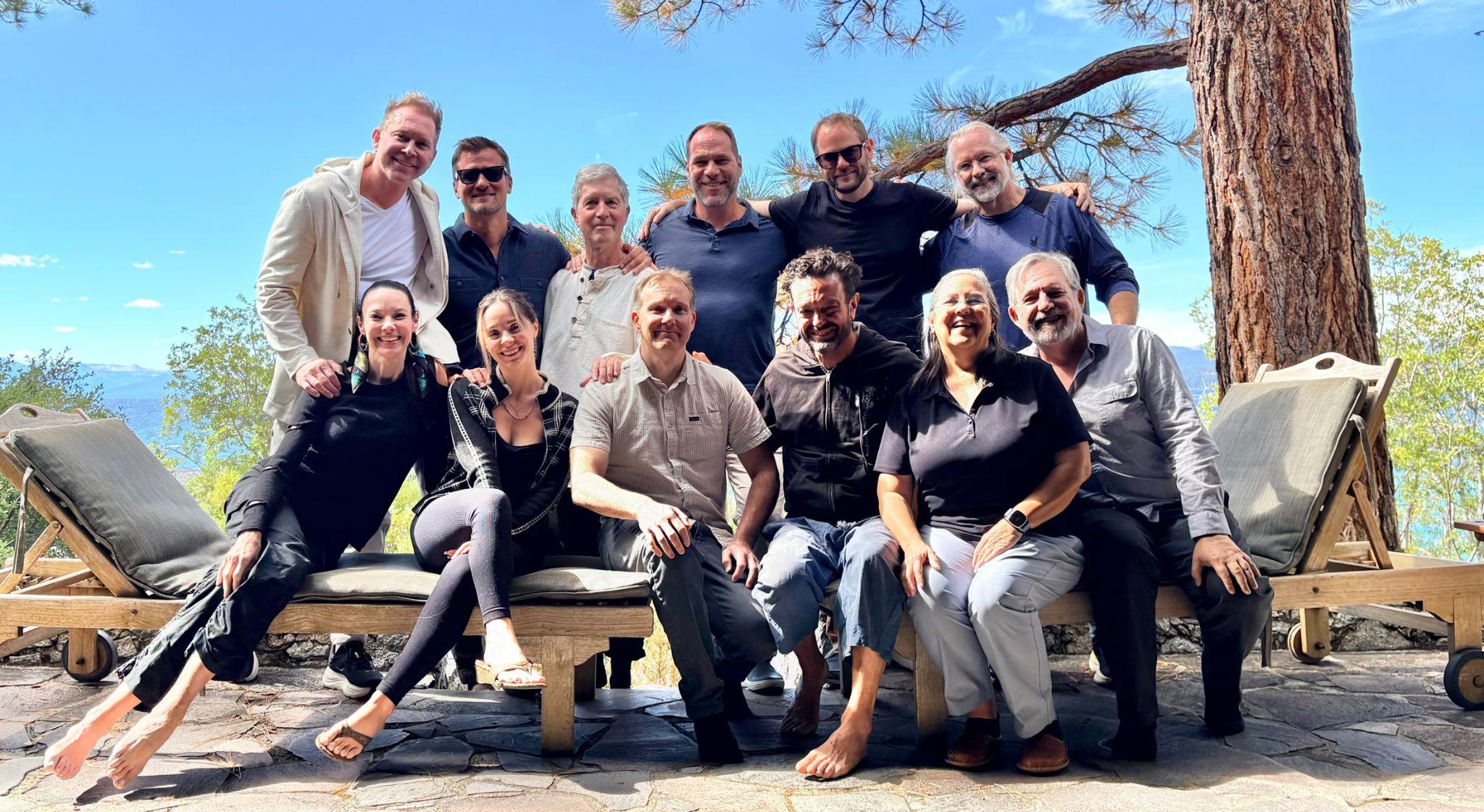
Leading integrative thinkers worked with a substantial provisional synthesis, subjecting it to interpretation, critique, revision, and further development. The Lab proved exceptionally productive. It advanced the emerging synthesis, strengthened the intellectual relationships needed to carry the work forward, and provided a practical setting for developing and testing a methodology of collaborative metatheoretical inquiry.
A collective book
We are now revising and extending the synthesis document into a collectively authored book, tentatively titled Big Theory, with the aim of completing the manuscript by the end of 2027. Intended as a foundational text for the emerging field, it will articulate the developing synthesis, explain its methodology, and identify significant disagreements and questions requiring further research.
From Big Theory to Big Visions for flourishing

IAM’s applied work connects Big Theory with Big Visions for flourishing: grounded proposals for transforming the institutions and systems through which collective life is organized. The purpose is to help move from understanding complex problems to identifying possibilities for systemic change, and from those possibilities to practical projects that can be implemented, evaluated, and improved.
The framework emerging through our collaborative synthesis is directly informing the development of Alethic AI, which is being built to simulate aspects of integrative thinking, helping individuals and communities examine complex problems and develop realist causal maps of the structures, mechanisms, and conditions generating them. The aim is to provide scaffolding for better sensemaking, practical judgment, and the development of users’ own integrative capacities.

Ecological regeneration is another central area of interest, alongside economics, education, governance, consciousness, and the meaning crisis. In the spirit of action research, practical interventions generate experience and evidence that can expose gaps, challenge assumptions, and reshape the frameworks guiding them.
Explore the work
We welcome researchers, educators, practitioners, institutional partners, and supporters interested in advancing the field of Big Theory and investigating its contribution to the complex challenges of our time.
Header photo by Davies Designs Studio, terraces by Lauren Taylor, Lagoon Nebula by NASA, on Unsplash.
