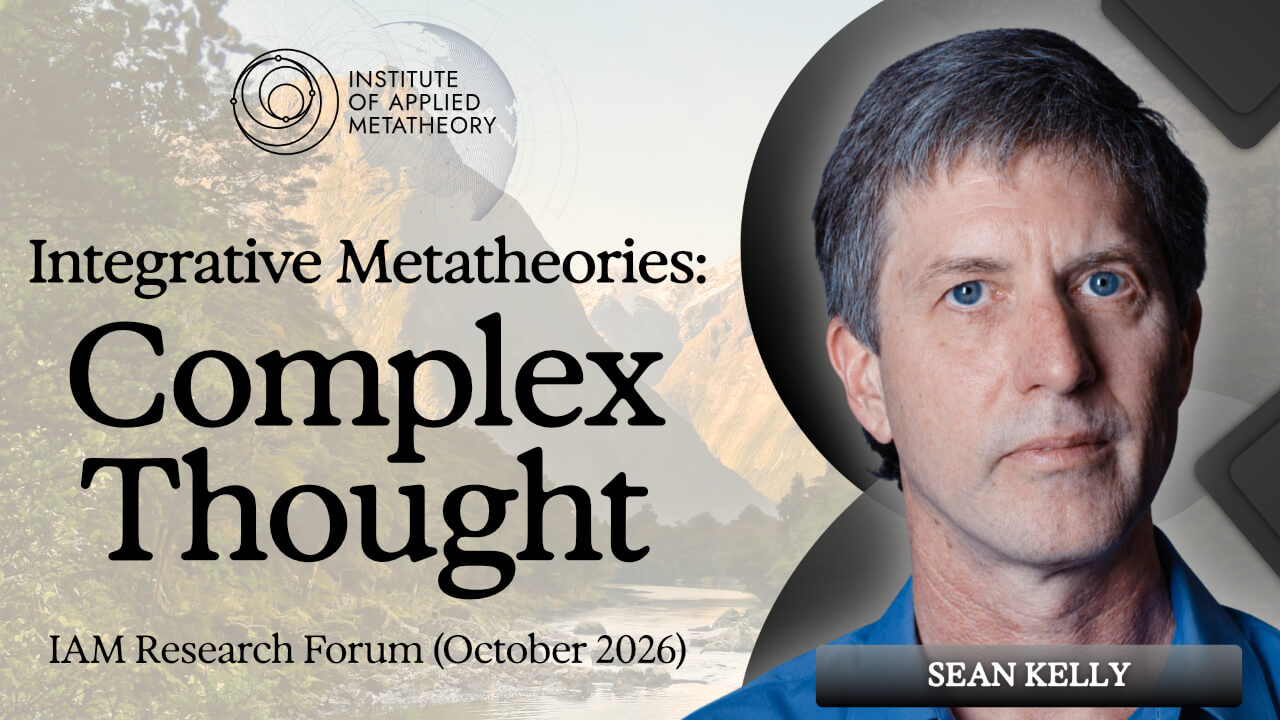
In this IAM Research Forum session, Sean Kelly introduces the complex thought of Edgar Morin, his mentor and friend of nearly forty years. Morin coined the word polycrisis in 1992, long before it went viral, and was convinced that a world this entangled can’t be understood by a way of thinking that cuts it into separate pieces.
He spent thirty years building an alternative in the six volumes of La Méthode, and its guiding habit is to hold together what we usually keep apart, like order and disorder, or gain and loss. Kelly follows that habit from the birth of the universe, through a single cell that already behaves like a subject, all the way to our own ideas, which take on a life of their own until, as Morin put it, we possess ideas which possess us. The same goes for us: homo sapiens, the wise animal, is also homo demens, the animal capable of madness, and also of rapture and creative expression. In the final volume, complex thinking becomes an ethics, and Morin’s word for the good is reliance: relinking what has been separated, starting with humanity and nature.
Timestamps:
00:00:00 – Introduction
00:01:51 – Who Was Edgar Morin?
00:11:08 – Homeland Earth and the Planetary Era
00:21:06 – Coining “Polycrisis”
00:25:40 – Dialogic, Recursive, Holographic
00:28:40 – The Nature of Nature
00:34:50 – The Life of Life: The Cell as Subject
00:47:50 – The Knowing of Knowing
00:51:55 – Ideas and the Noosphere
01:03:27 – Homo Sapiens, Homo Demens
01:05:50 – Ethics and Reliance
01:24:00 – What Kind of Realist Was Morin?
